
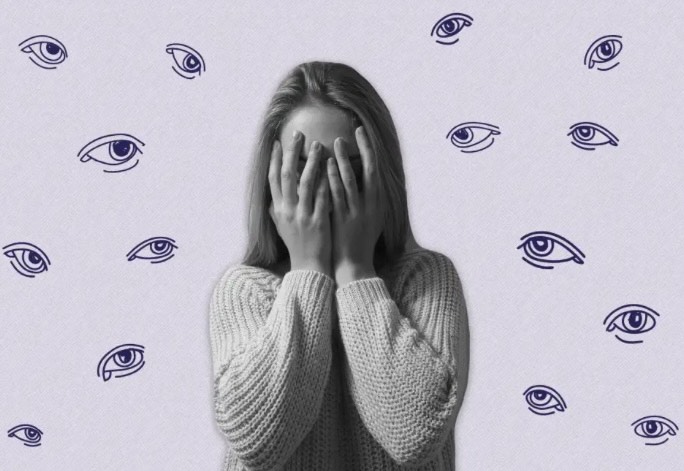
I get so lonely at times & know it’s not healthy to spend so much time alone. But when I meet up with friends I feel like I don’t know how to do friendship or socializing anymore. I feel like I say all the wrong things, I react unpredictably to comments, I brush off condolences one minute, saying “I’m OK”, then burst into tears at something totally unrelated. Inevitably I go home & rehash the conversations, feeling guilty for anything I may have said that could have been misinterpreted, came across wrong, etc. It’s like I’ve lost that part of my brain that was once my forte: communication. CS Lewis said it so well in his book:
“At other times it feels like being mildly drunk, or concussed. There is a
~CS Lewis, A Grief Observed
sort of invisible blanket between the world and me. I find it hard to take in
what anyone says. Or perhaps, hard to want to take it in. It is so uninteresting.
Yet I want the others to be about me. I dread the moments when the house is
empty. If only they would talk to one another and not to me . . .
An odd by-product of my loss is that I’m afraid of being an
embarrassment to everyone I meet. At work, at the club, in the street, I see
people, as they approach me, trying to make up their minds whether they’ll
‘say something about it’ or not. I hate it if they do, and if they don’t . . .”
Interestingly there are some comprehensive studies done on the correlation between grief and social anxiety. I found this report especially insightful:
“Despite the widely held assumption that social support is important in facilitating grief adaptation, evidence for the role of social support in improving bereavement outcomes is inconsistent. Although some studies have found that access to social support leads to better psychological outcomes following loss, others have not. A recent study with parents bereaved by the 2011 Norwegian terrorist attacks found that those with high levels of social support at baseline were just as likely to experience prolonged grief disorder (PGD) 2 years later than parents with low or no social support. Conversely, another study found social support in the first 6 months after loss to protect against the development of post-traumatic stress disorder, and depression 5 months later. The source of this discrepancy remains unclear. Perceived social support requires the bereaved individual to be willing and able to engage emotionally with their social network.
“Participants spoke about the negative consequences of emotional expression within a social context, which led them to conceal their grief. In particular, participants with PGD, more than those without, described feeling differently in the company of others since their loss, a felt sense that led to avoidance of social situations or a significant reduction in their ability to tolerate social situations for prolonged periods This felt sense appeared to be driven by negative interpretations of other people’s observed or anticipated reactions to grief expressions and was accompanied by concerns about being authentic in one’s own grief when in the company of others as well as a wider sense of a changed self in social situations and alienation from others. Previous research has referred to anticipated negative consequences of grief for the individuals, such as, “If I allow my feelings to come I will lose control.” Interpretations of the impact of one’s behavior and appearance on other people have been described within the social anxiety literature. People with social anxiety disorder have “a strong desire to convey a particular favorable impression of oneself to others and marked insecurity about one’s ability to do so”
“Remarkably, people with social anxiety disorder based their interpretation that they were coming across badly from internal evidence, emotions (feeling anxious) and bodily sensations (feeling warm as a sign of blushing). The sense of social disconnection we observed in people with PGD appears related to social anxiety in that bereaved individuals fear being overwhelmed by their grief in a social setting and engage in considerable effort to maintain their composed presence. However, the interpretations of a changed self in social situations and associated felt sense of social disconnection can arise in individuals who may have previously never experienced socially dependent fears and are specific to grief in that they include judgments about their social network’s readiness to tolerate and empathize with their expressed grief as well as judgments about their own desire to share their grief.”
~Kirsten Smith, Jennifer Wild, & Anke Ehlers, “The Masking of Mourning: Social Disconnection After Bereavement and Its Role in Psychological Distress”
 Grief Graffiti
Leave a comment